

Why You Need Professional Floor Plans Before Construction — And How Unified Studio Architect Makes It Stress-Free
Meta Description:
Secure smart architecture from the start. Learn why professional floor plans are essential before construction, and how Unified Studio Architect’s Floor Plan, Building Permit, & 3D Modeling services help you save time, money, and headaches.
Table of Contents
- Introduction
- What Are Professional Floor Plans?
- Key Benefits of Having Floor Plans Before Construction
- Clarity of Vision
- Optimized Space Utilization
- Cost Savings & Budget Control
- Building Code & Permit Compliance
- Improved Stakeholder Communication
- Design Visualization
- Flexibility for Future Changes
- Increased Property Value
- Real-World Impacts: Risks of Skipping Professional Floor Plans
- Unified Studio Architect’s Suite of Services
- Floor Plan Services
- Building Permit Services
- 3D Architectural Modeling / Visualization Services
- How Unified Studio Architect Helps You, Step by Step
- Local & Nationwide Support — Why That Matters
- FAQs
- Summary & Call to Action
1. Introduction
When you’re planning the construction of a new home, an addition, or a full renovation, excitement often pulls you toward picking finishes, wall colors, lighting fixtures. But those are later decisions. If you rush into construction without professional floor plans, you’re setting up for miscommunication, budget overruns, frustration—and often regret.
Professional floor plans are not optional extras. They are foundational documents that architects, contractors, permit offices, engineers, and ultimately you use to ensure the final building matches your vision, is safe, compliant, and built efficiently.
At Unified Studio Architect, we understand that foundational nature. We offer comprehensive Floor Plan Services, Building Permit Services, and 3D Architectural Modeling to ensure your project is well defined, well permitted, and well visualized from the start.
In this article, I’ll explain why you need professional floor plans before you break ground, what risks you face if you skip them, and exactly how Unified Studio Architect supports you through the process—especially if you’re in the United States, planning residential or multi-unit projects.
2. What Are Professional Floor Plans?
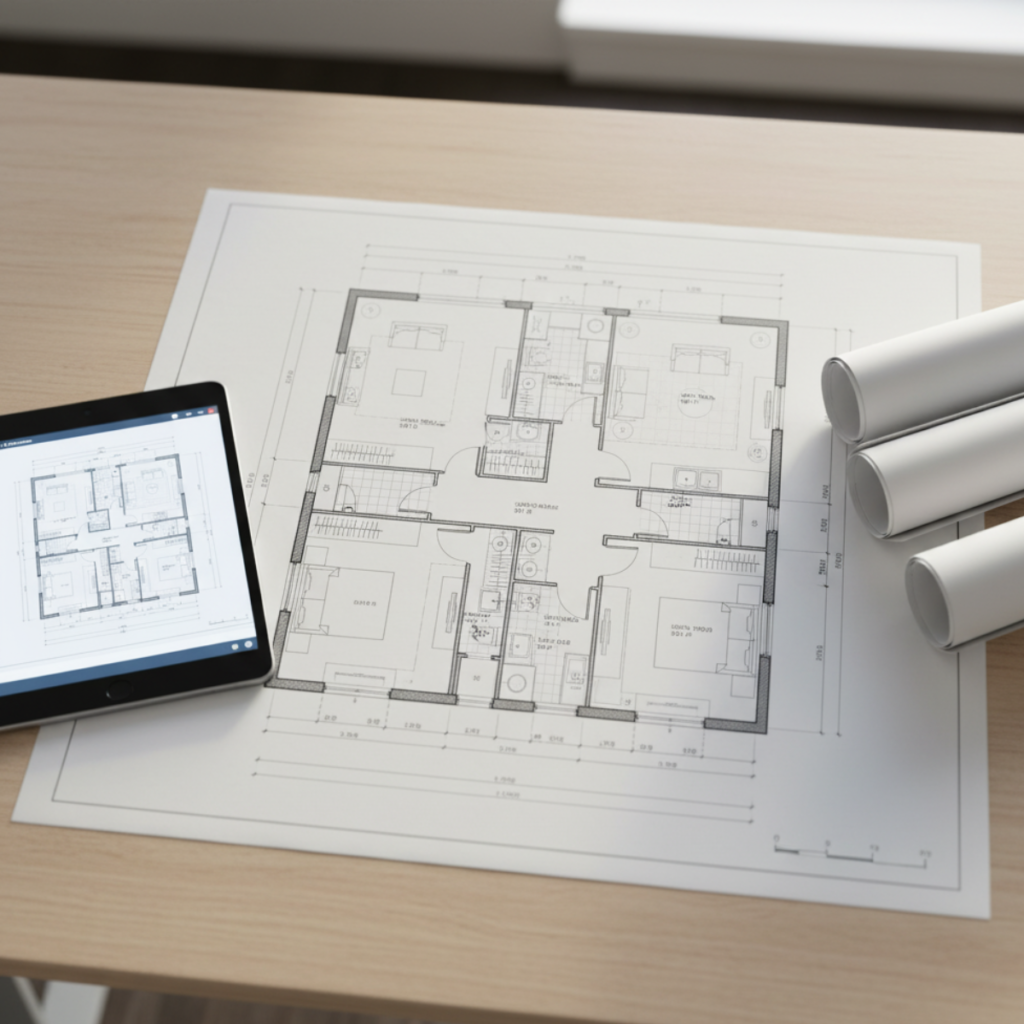
A professional floor plan is a precise scaled drawing of the layout of a building from above. It shows:
- Walls, partitions, structural elements
- Doors, windows, openings
- Room dimensions, ceiling heights, usable space
- Circulation paths (how people will move through)
- Furniture layouts (optional but helpful for planning)
- Location of plumbing fixtures, HVAC, electrical outlets (when detailed)
Unlike rough sketches or ideas in your head, these are working documents that guide every step: design, engineering integrations, cost estimation, permit submission, construction.
3. Key Benefits of Having Floor Plans Before Construction

Here’s exactly how professional floor plans help—and why they are non-negotiable if you want a smoother, cost-efficient, high-quality build.
a. Clarity of Vision
- You can see your ideas laid out in measurable reality.
- You can test and compare layouts: where are your bedrooms, bathrooms, how big is the kitchen, how much natural light?
- It helps avoid “I thought the room would feel bigger,” “I didn’t realize the stair would block the window,” or “the doorway isn’t where I expected.”
b. Optimized Space Utilization
- Makes every square foot count: you avoid wasted corridors, odd dead spaces, cramped rooms.
- Helps in planning functional relationships: kitchen near dining, bathrooms near bedrooms, good size closets, etc.
- It also helps with circulation (flow), daylighting (how light enters rooms), and cross-ventilation in some climates or designs.
c. Cost Savings & Budget Control
- Changes are far cheaper before construction than after foundation or framing.
- Helps contractors quote accurately. If you have detailed floor plans, you get more reliable cost estimates.
- Minimizes surprises: for example, discovering mid-construction that plumbing or wiring has to travel much farther, or that walls need reinforcing.
d. Building Code & Permit Compliance
- Many local jurisdictions require permit-ready floor plans. Without them, plans may be rejected.
- Includes setbacks, fire safety measures, egress windows, structural sizes, electrical layout, accessibility etc.
- Ensures you don’t violate zoning or local building codes. That saves you time, fees, and legal issues.
e. Improved Stakeholder Communication
- Architects, engineers, contractors, interior designers all use the same documents, same measured values.
- Reduces miscommunication. If someone misreads your informal sketch, or “I thought this wall was there,” things go wrong.
- Also helps you, the owner, stay aligned with what’s really going to be built.
f. Design Visualization
- With professional floor plans you can generate renderings, virtual walkthroughs, or 3D models.
- You can experiment with furniture, finishes, room flows. Before building, you see if a certain layout “feels right”—how light comes in, how rooms relate.
- Reduces the regret of picking an expensive finish or layout that looks great on paper but feels cramped or dark in reality.
g. Flexibility for Future Changes
- If you plan expansions, accessibility (e.g., aging in place), or multi-use transformations in future, good floor plans anticipate those needs.
- It’s easier to build in future adaptability than retrofit.
h. Increased Property Value
- Well-designed floor plans with good layout, flow, lighting, and finishes attract better buyers.
- Properties with thoughtful layouts often sell faster.
- Investors, appraisers, and buyers pay attention to how “liveable” a space is—floor plans are part of that.
4. Real-World Impacts: Risks of Skipping Professional Floor Plans
To understand how essential floor plans are, here are what can go wrong if you don’t invest in them prior to construction:
- Building permits delayed or rejected due to incomplete or non-compliant drawings.
- Structural or utility errors (e.g. plumbing or electrical in worse places, walls in the wrong spot, insufficient structural support).
- Overruns in budget — budget wars when contractors hit unforeseen problems.
- Time delays while changes are made: ordering new materials, demolishing parts, redesigning mid-build.
- Dissatisfaction with final layout: rooms don’t feel right, traffic flow is bad, bedrooms too small or awkward.
- Legal or safety issues: fire exits, window egress, safety compliance may be lacking.
Imagine investing in flooring and cabinetry only to find a window placement means less light, or furniture doesn’t fit as expected—that’s more than cosmetic; it’s a sign you didn’t take the time to plan.
5. Unified Studio Architect’s Suite of Services
At this point, you know why you need professional floor plans. Now let’s get into how Unified Studio Architect helps you through specific services. These are interlinked and build on each other:
Floor Plan Services
Unified Studio Architect offers floor plan services as a foundation. These include:
- Drafting scaled architectural floor plans with precise room dimensions, wall locations, window/door placements, etc.
- Layout options to ensure functional flow, efficient use of space, daylighting, cross-ventilation, etc.
- Furniture layout mockups where needed so you can see how spaces will feel.
These services are the first step. Without accurate floor plans, subsequent steps (permits, 3D visualization, construction) suffer.
Building Permit Services
Once your floor plans are solid, Unified Studio Architect’s Building Permit Services ensure that your documentation is fully permit-ready. Key features:
- Detailed construction documents aligned with local building codes. At Unified Studio Architect, we help with residential permits across different states. unifiedstudioarchitect.com
- Coordination with local authorities: submitting plans, revising if necessary, ensuring compliance with zoning, structural, fire, electrical, plumbing, accessibility codes. unifiedstudioarchitect.com
- Handling different project types: single-family residences, multi-family units (2-4 units), larger apartment buildings, townhouses. unifiedstudioarchitect.com
So instead of struggling with permit paperwork, you rely on Unified Studio Architect to navigate that successfully, minimizing delays and reducing the risk of rejection.
3D Architectural Modeling Services
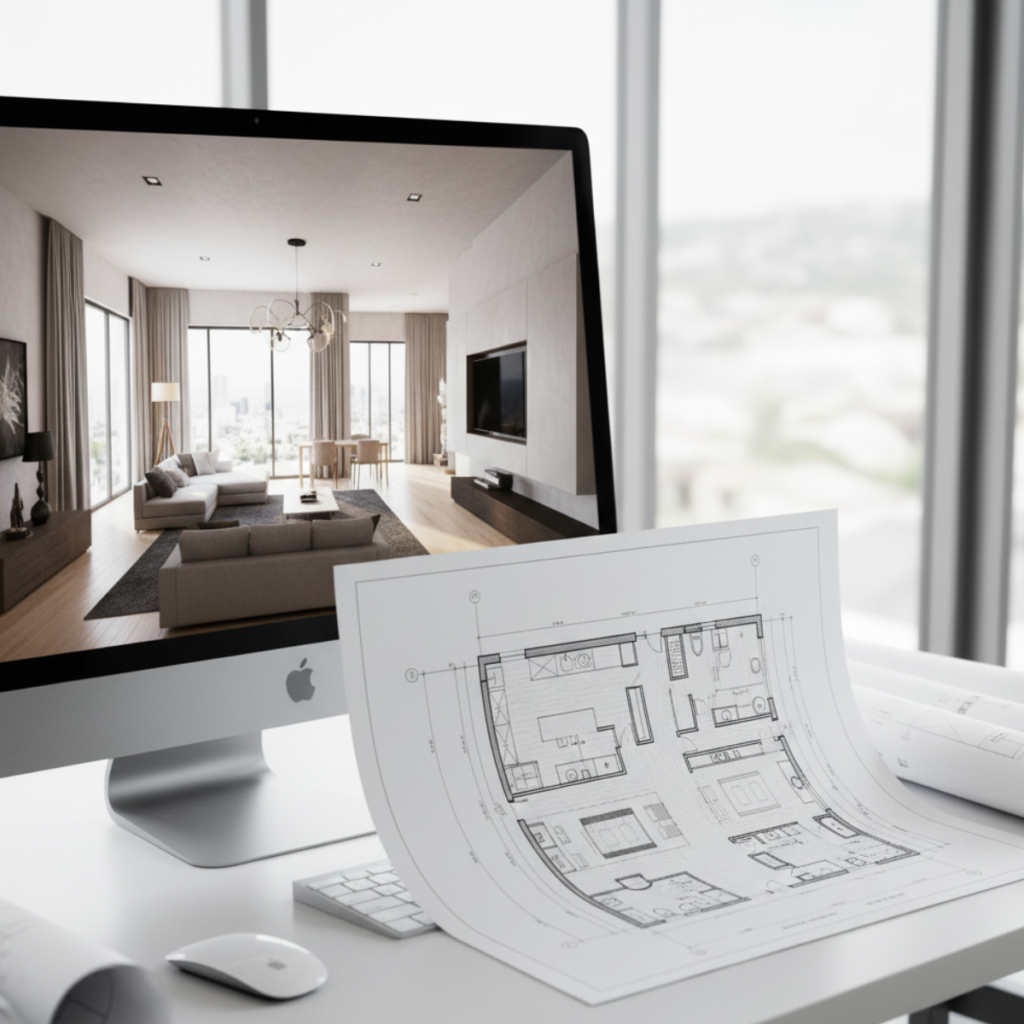
Visualization makes decisions easier. Unified Studio Architect’s 3D modeling / architectural visualization helps you:
- See how your design looks in three dimensions, with realistic lighting, spatial relationships, and furniture.
- Walk through virtual versions of your space to test feel, scale, flow before committing.
- Spot issues early: sightlines (how views from windows feel), ceiling heights, how the light comes in, how your finishes or materials interact.
This service complements the floor plan and permit services—they work together. First the floor plan, then permit documentation, then 3D visualization to confirm and refine.
6. How Unified Studio Architect Helps You, Step by Step
Here’s how the process typically works when you choose us. It helps you avoid surprises and ensures consistent quality.
| Stage | What You’ll Do / We’ll Do | Why It Matters |
|---|---|---|
| 1. Initial Consultation | You share your goals: size, style, function, budget, timeline. Unified Studio Architect listens, asks questions about room relationships, future expansion, local codes. | Ensures your personal needs are captured; avoids last-minute changes. |
| 2. Preliminary Floor Plan Concepts | Based on your input, we provide one or more layout options. Scaled plans with approximate dimensions, furniture layout, room functions. | You can compare, give feedback, adjust before committing. |
| 3. Detailed Floor Plans | We produce precise, dimensioned floor plans. Wall locations, door/window placements, placements for plumbing/electrical rough-ins. | Ensures accuracy for construction and cost estimation. |
| 4. Building Permit Documentation | We prepare all documents needed for permit application: code compliance, structural notes, site plans, elevation drawings etc. We manage submissions, revisions. | Reduces risk of rejections or delays; you get legal clearance. |
| 5. 3D Modeling / Visualization | We take the approved floor plan and produce 3D renderings, walkthroughs, material/finish samples virtually. | Helps you make informed decisions about aesthetics, scale, and feel. |
| 6. Final Adjustments & Sign-off | Based on the 3D model and permit feedback, small adjustments are made. We ensure all documents are ready. | Ensures you are satisfied and that everything is aligned before construction. |
| 7. Construction Begins with Confidence | With approved plans, permits, and visual confirmation, your contractor builds with minimal surprises. | Saves cost, saves time, maximizes satisfaction. |
7. Local & Nationwide Support — Why That Matters for U.S. Projects
Unified Studio Architect doesn’t just work in one state. According to their Building Permit Services page, the company covers multiple states and major cities for permit services. unifiedstudioarchitect.com
This brings several advantages:
- Local code knowledge: Building codes, permit requirements, zoning laws vary widely from state to state and even city to city. Having architects who understand your local jurisdiction is essential.
- Speed: If your service provider has experience in your area, they already know typical pitfalls, submission checklists, and what authorities tend to request. This cuts down turnaround times.
- Permit-ready drawings that pass inspection: Drawing something that meets code in one state doesn’t guarantee it meets code in another. Nationwide experience ensures your plan is more likely to be accepted without costly revisions.
So whether you’re in Texas, Florida, Georgia, Illinois, Maryland or elsewhere in the U.S., Unified Studio Architect can guide you in creating floor plans, securing permits, and visualizing your design. unifiedstudioarchitect.com
8. FAQs
Here are frequently asked questions potential clients often have, with direct answers. These are especially helpful for SEO/AEO because many people search these exact queries.
Q1: What exactly is a “floor plan” and why can’t I use rough sketches?
A floor plan is a highly precise, scaled drawing that includes walls, doors, windows, room dimensions, and often rough locations for utilities. Rough sketches may give you basic ideas, but they typically lack scale, don’t account for code requirements, and can’t be used for permits or reliable cost estimation.
Q2: How far in advance do I need floor plans before starting construction?
Ideally, you complete your floor plans before hiring contractors, procuring materials, or applying for building permits. Typically, this is done in the “pre-construction” phase—weeks to months before breaking ground depending on project size.
Q3: Will professional floor plans increase my upfront costs?
Yes, slightly. But this minor upfront investment saves you much more later by avoiding rework, design changes, code issues, and delays. Unified Studio Architect ensures that the plans are permit-ready, reducing risk of unexpected costs.
Q4: Are floor plans always required for building permits?
In almost every U.S. jurisdiction, yes. Building permit offices typically require scaled architectural drawings as part of the submission package. If your floor plan is incomplete or not compliant, permits get rejected.
Q5: How detailed are the floor plans from Unified Studio Architect?
Unified Studio Architect provides fully dimensioned floor plans including walls, doors, windows, room functions, sometimes furniture layouts, plumbing/electrical rough-ins depending on scope. Then these are used to produce permit-ready documentation.
Q6: What is 3D architectural modeling, and how much does it really help?
3D modeling is using software to create visualizations (rendered images, walkthroughs) of your space based on the floor plan and elevation drawings. It helps you see scale, light, materials, sightlines, which often reveal issues not evident in 2D plans. It also helps you make finish/material choices with more confidence.
Q7: How long does it take to go from initial concept to permit-ready set with Unified Studio Architect?
It depends on project size, complexity, and local jurisdiction. But because Unified Studio Architect offers floor plan drafting, permit documentation, and local code knowledge, delays are minimized. Typically, small projects (single-family homes, modest additions) take a few weeks; larger or complex ones take longer.
9. Summary
Summary
Starting construction without professional floor plans is like trying to build a house of cards—it looks good until the first strong wind.
- Floor plans bring clarity, save money, reduce delays, and avoid legal or code issues.
- They are the foundation for obtaining building permits and ensuring your project is compliant with local rules.
- Visualization through 3D modeling allows you to “try before you build,” confirming that the spaces feel right, finishes look good, and everything flows.
Unified Studio Architect provides all the tools you need: expert Floor Plan Services, reliable Building Permit Services, and immersive 3D Architectural Modeling / Visualization.
Call to Action
If you are planning to build or renovate in the United States, don’t wait until you have already made big decisions. Reach out to Unified Studio Architect today for a free consultation. Let us help you:
- Draft precise floor plans that capture your needs
- Prepare all permit documents to code
- Visualize your project in 3D before you lay a single brick
Ensure you build with confidence, clarity, and efficiency. Visit our Floor Plan Services page, Building Permit Services page, or 3D Architectural Modeling page to get started.