Beauty Salon Permit Drawings New Carrollton, MD | Unified Studio Architect
Beauty salon permit drawings Maryland Commercial interior architect New Carrollton Salon tenant improvement drawings Hair salon renovation architect Maryland Permit drawings for salon fit-out Beauty studio interior architect Commercial interior alteration drawings Occupancy load calculation salon Salon architect New Carrollton MD Commercial permit drawings Prince George's County Tenant improvement architect Annapolis Road Beauty salon architect near Lanham, Hyattsville, College Park, Bowie

Beauty Salon Interior Fit-Out & Permit Drawings — New Carrollton, Maryland

Permit-ready architectural drawings for a 3,100+ SF beauty salon tenant improvement in New Carrollton — built for code compliance, ADA accessibility, and a smooth path through Prince George's County plan review.

Request Your Commercial Permit Set
Parameters Matrix

Project Snapshot

DetailInformation
LocationAnnapolis Road
CityNew Carrollton
StateMaryland
CountyPrince George's County
Project TypeCommercial Interior Alteration — Beauty Salon Fit-Out
Occupancy GroupGroup B (Business)
Construction TypeType II-B
Occupant Load77 persons (calculated), 70 persons (fixed-place provided)
ScopeHair braiding stations, hair washing stations, ADA restroom upgrades, new electrical, plumbing, mechanical coordination, egress compliance
Case Narrative

Project Overview

Magic Fingers Braiding needed an existing commercial shell on Annapolis Road in New Carrollton converted into a fully functional beauty salon — one built to operate at real-world capacity from day one. Unified Studio Architect led the architectural design and permit documentation for the entire tenant improvement, translating the owner's operational needs into a code-compliant, inspector-ready drawing set.
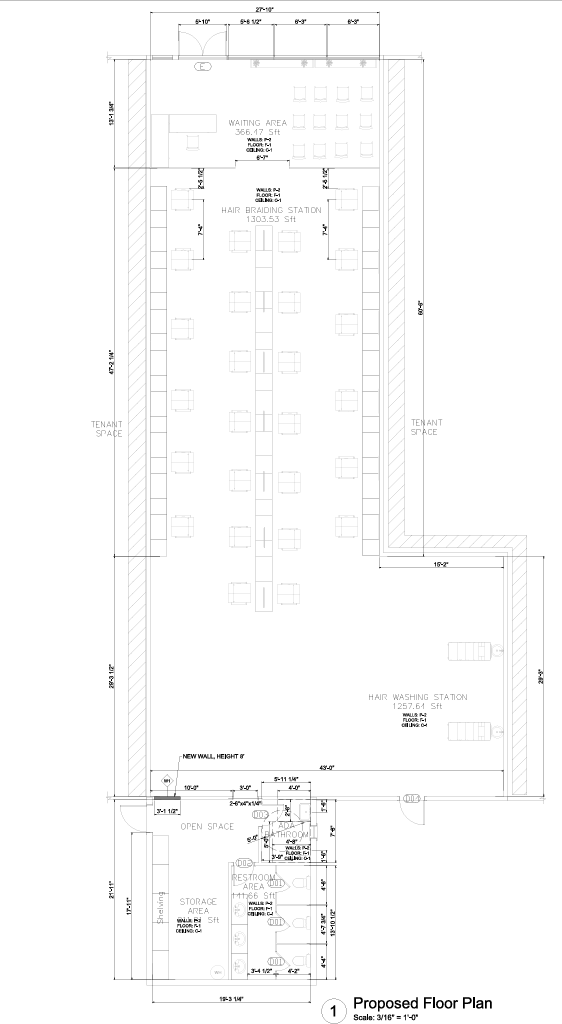
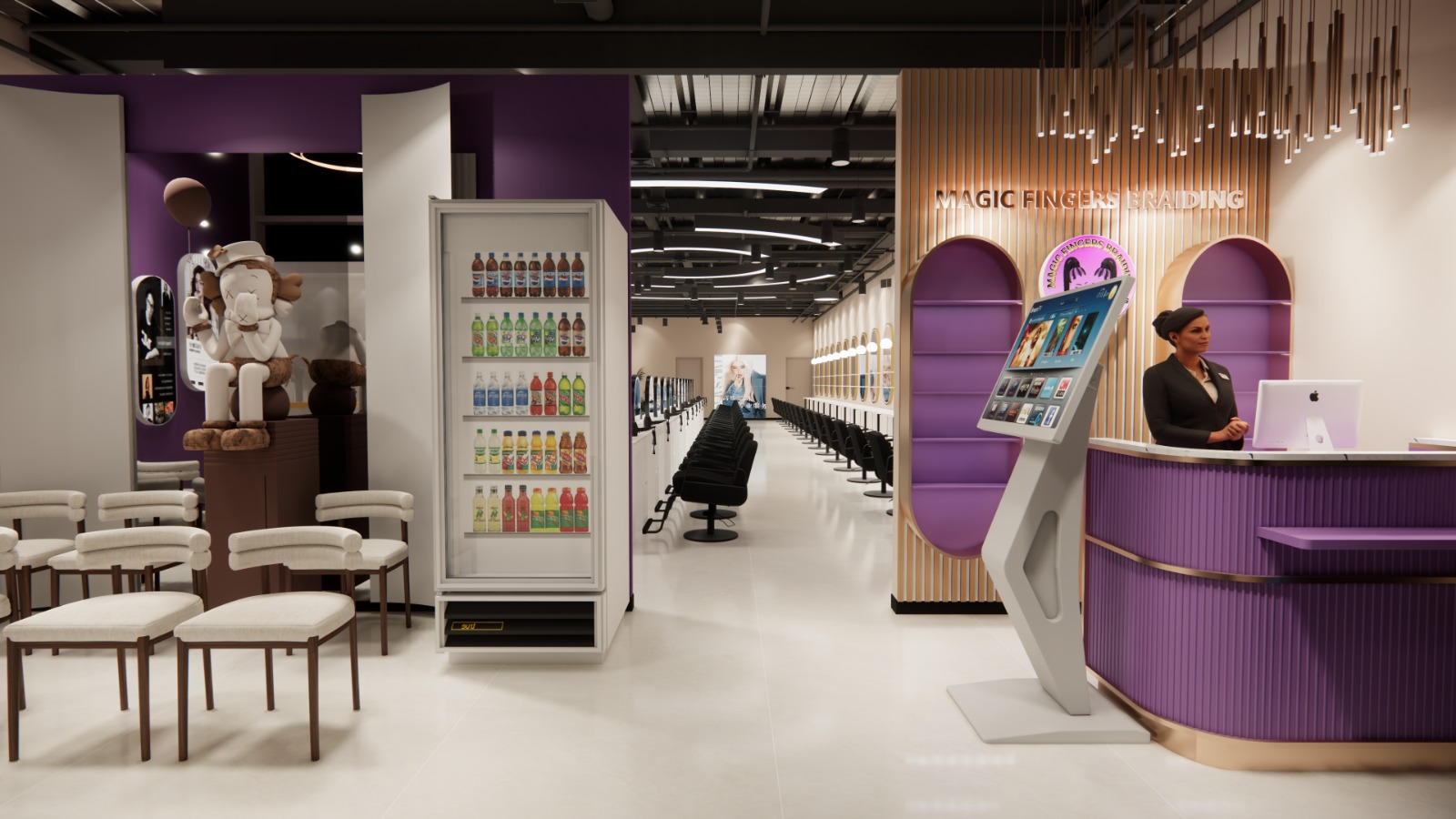
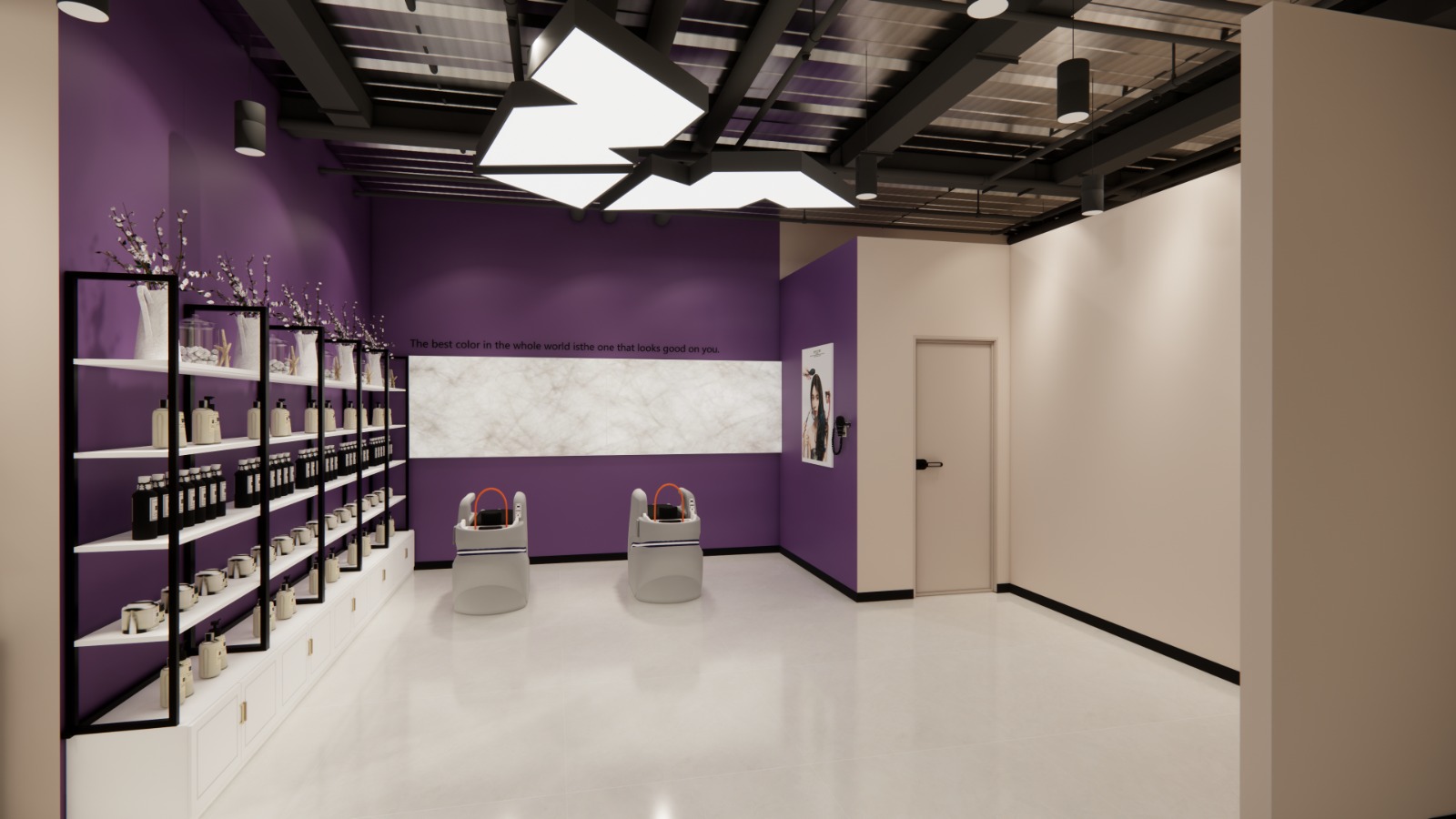
The project required careful space planning for salon operations: 26 hair braiding stations, two hair washing stations, a dedicated waiting area, and a storage room, all arranged within a single-story Group B tenant space. Every square foot had to support both client volume and code compliance simultaneously.
Occupant load strategy was central to the layout. Working from the IBC's gross-area occupant load factors, the team calculated a maximum occupant load of 77 persons across the hair braiding area, waiting area, hair washing area, and storage room — then cross-checked that figure against a fixed-place count of 70 persons based on actual station counts (one stylist plus one client per station). That dual calculation drove decisions about exit width, aisle clearance, and furniture layout before a single wall was framed.
Code compliance ran through every discipline: 2018 IBC and IEBC provisions for tenant alterations, NFPA 101 life safety requirements, NFPA 70 electrical standards, and Prince George's County's adopted building, electrical, and fire safety subtitles.
ADA accessibility upgrades brought the existing restrooms up to ICC A117.1 standards — clear floor space, grab bar placement, lavatory clearances, and accessory mounting heights were all detailed and dimensioned for inspector sign-off.
Finally, MEP coordination tied new electrical circuits, a new water heater, expanded plumbing, and mechanical ventilation into the existing building infrastructure, including the rooftop HVAC unit, without disrupting the building's existing systems.
Deliverables Register

What We Delivered

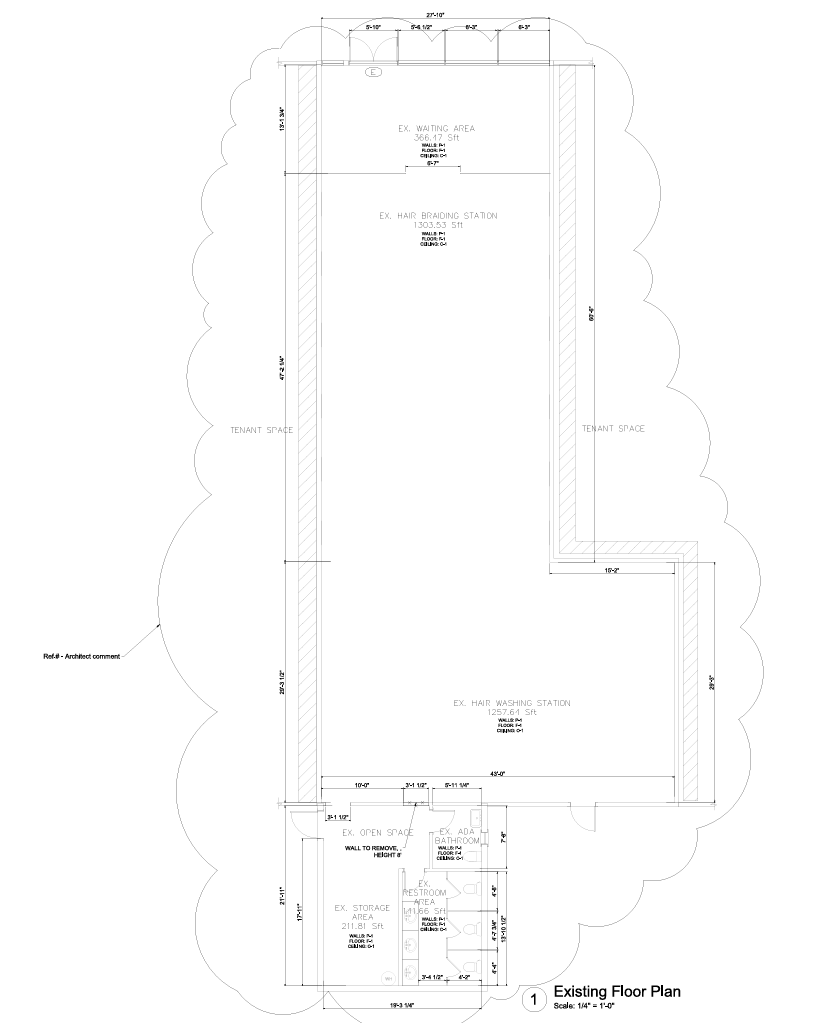
  • ARCH-01 Existing floor plan documentation, including wall demolition mapping
  • ARCH-02 Proposed floor plan layout with braiding stations, wash stations, waiting area, and storage
  • ARCH-03 Occupancy load calculations (gross-area method and fixed-place method)
  • LS-01 Egress plan with travel distances, common path of travel, and exit signage locations
  • ADA-01 ADA restroom compliance drawings (two detail sheets covering clearances, grab bars, signage, and fixtures)
  • ELEC-01 Electrical power plan, including a new panelboard schedule and 200-amp service riser
  • LIGHT-01 Lighting plan coordinated with egress and emergency illumination requirements
  • PLUMB-01 Plumbing floor plan and riser diagram
  • PLUMB-02 Water supply layout with fixture-by-fixture sizing
  • MECH-01 Mechanical ventilation plan with fresh-air calculations per IMC Table 403.3.1.1
  • MECH-02 HVAC coordination with the existing rooftop unit and exhaust fan schedule
Spatial Resolution

Design Challenges

Optimizing Braiding Station Density

With 26 hair braiding stations packed into 1,303.53 SF, the layout had to balance maximum usable station count against required clearances, sightlines, and code-driven occupant load limits — without the space feeling cramped for stylists or clients.

Customer Flow and Waiting Zones

The 366.47 SF waiting area was sized to comfortably hold clients between services while keeping circulation paths to the braiding and wash stations clear, supporting a calculated occupant load of 25 persons in that zone.

Wash Station Plumbing Coordination

The two hair washing stations required dedicated waste, vent, and hot/cold water connections, all routed to tie into the building's existing sanitary and water mains without disrupting adjacent tenant spaces.

ADA Restroom Accessibility

Bringing existing restrooms into compliance meant resolving turning radii, fixture clearances, and grab bar placement within a fixed existing footprint — solved through two dedicated ADA detail sheets referencing ICC/ANSI A117.1 figures directly.

Fire Egress Requirements

The space required two exits at minimum; the final design provided three, with a maximum calculated travel distance of 53'-7" and the longest common path of travel at 38'-6" — both comfortably within code allowances for a non-sprinklered path of travel.

Ventilation Design

Fresh-air requirements were calculated separately for each zone — hair braiding, hair washing, waiting area, and storage — under IMC Table 403.3.1.1, totaling roughly 1,495 CFM required against 1,800 CFM provided by the existing rooftop unit, leaving margin for the salon's actual occupancy.

Structural Parameters

Code Compliance Section

Building & Structural Codes

Designed and documented in accordance with the 2018 International Building Code (IBC) and the 2018 International Existing Building Code (IEBC) for commercial tenant alterations.

Life Safety & Fire Protection

Engineered to satisfy NFPA 101 (Life Safety Code) and the Maryland State Fire Prevention Code alongside Prince George's County fire safety subtitles.

Electrical Systems

Power layouts, service risers, and load calculations developed concurrently to remain fully compliant with NFPA 70 (National Electrical Code) standards.

Local Jurisdictional Mandates

Tailored directly to the specific adopted codes and local subtitles enforced by the Prince George's County Building Code inspector framework.

Accessibility Requirements

Every dynamic space element meets ADA / ICC A117.1 accessibility standards, completely minimizing code review revisions.

Prince George's County Focus

Regional Expertise & Local Process Insights

Unified Studio Architect provides commercial architectural and permit drawing services for salons, beauty studios, and retail tenant improvements throughout New Carrollton and greater Prince George's County, Maryland. Whether you're opening a new salon on Annapolis Road or converting an existing retail shell elsewhere in New Carrollton, our team handles space planning, occupancy calculations, and full MEP coordination from concept through permit submittal.
We regularly work with salon and beauty studio owners as a salon architect in New Carrollton, a trusted source for commercial permit drawings in Prince George's County, a beauty salon interior architect serving Maryland, and a specialized tenant improvement architect near Annapolis Road.
Our service area extends beyond New Carrollton to nearby communities including Lanham, Hyattsville, College Park, and Bowie — giving salon and retail owners across the Prince George's County corridor access to the same code-compliant, permit-ready documentation delivered for Magic Fingers Braiding.
Information Center

Frequently Asked Questions

A salon tenant improvement in Maryland typically requires a building permit covering architectural, electrical, plumbing, and mechanical work, reviewed against the locally adopted IBC and IEBC editions, plus any county-specific subtitles (such as Prince George's County's building, electrical, and fire safety codes). A licensed professional must prepare and certify the drawing set.
Yes. As a Group B occupancy serving the public, a beauty salon's restrooms must comply with ADA and ICC/ANSI A117.1 accessibility standards, including clear floor space, grab bars, accessible lavatories, and compliant signage.
Under the IBC, a Group B occupancy of this size requires a minimum of two exits. Depending on travel distance, common path of travel, and occupant load, additional exits may be necessary — the Magic Fingers Braiding project, for example, was designed with three.
A complete salon tenant improvement permit set generally includes: existing and proposed floor plans, an egress plan, occupancy load calculations, ADA compliance details, an electrical power and lighting plan, a plumbing and water supply plan, and a mechanical ventilation plan — all sealed by a licensed design professional.
Cost depends on square footage, scope (cosmetic vs. full MEP buildout), and the number of disciplines required. A space the size of Magic Fingers Braiding — with full electrical, plumbing, and mechanical drawings — sits at the higher end of typical tenant improvement scopes. Contact us for a project-specific quote.
Timelines vary by submission volume and scope, but a complete, well-coordinated drawing set with consistent occupancy calculations across all disciplines significantly reduces the back-and-forth that extends approval timelines.
Yes. Salons require calculated outdoor airflow rates per occupied zone under the International Mechanical Code, and those calculations must be documented and coordinated with existing or new HVAC equipment.
Occupant load determines how many people your space can legally hold based on square footage and use type. It drives exit count, egress width, and plumbing fixture requirements — getting it wrong can delay or derail your permit.
Often, yes. Many existing restrooms can be updated with revised fixture placement, grab bars, and signage rather than a full teardown — our ADA detail drawings document exactly what's needed.
In Maryland, commercial tenant improvement drawings generally must be prepared or certified by a licensed design professional, particularly when life safety, electrical, plumbing, or mechanical systems are involved.
The gross-area method calculates occupant load from square footage and use-based factors. The fixed-place method counts the actual number of seats or stations provided. Code requires checking both and designing to the more conservative result.
Yes. Unified Studio Architect provides ongoing coordination through construction, including responding to field questions and verifying that built conditions match the permitted drawings.
Professional Standards

Why Choose Unified Studio Architect

Fast Permit Turnaround

Drawing sets structured carefully to minimize plan review comments and re-submittal cycles.

Commercial Fit-Out Expertise

Deep experience with salons, beauty studios, and personal service occupancies.

Multi-Discipline Coordination

Architectural, electrical, plumbing, and mechanical drawings developed together dynamically, not in isolation.

Code-Compliant Drawings

Every individual sheet is cross-referenced directly against current IBC, IEBC, NFPA, and local county codes.

Tenant Improvement Specialists

Focused experience converting complex, existing commercial shells into fast operating businesses.

Scroll to Top