

Architectural Estimation Services: How They Save You Time and Money
Introduction: Why Every Project Needs More Than a Vision
Every construction project begins with a vision—a homeowner dreams of a custom residence, a business envisions a new retail space, or a developer imagines a multi-unit community. But no matter how inspiring the vision, it cannot succeed without financial clarity. This is where architectural estimation services play a critical role.
Estimation is the silent backbone of construction. While design defines the aesthetics and permits ensure compliance, estimation ensures that budgets, timelines, and resources align with reality. Without it, projects can fall into common traps: cost overruns, unfinished work, and strained relationships between owners, contractors, and investors.
In today’s construction market, where material costs fluctuate weekly, labor shortages create unpredictability, and regulatory requirements are increasingly complex, professional estimation is essential. This guide explores architectural estimation services in full detail, showing exactly how they save both time and money, while creating stability and confidence for every stakeholder involved.
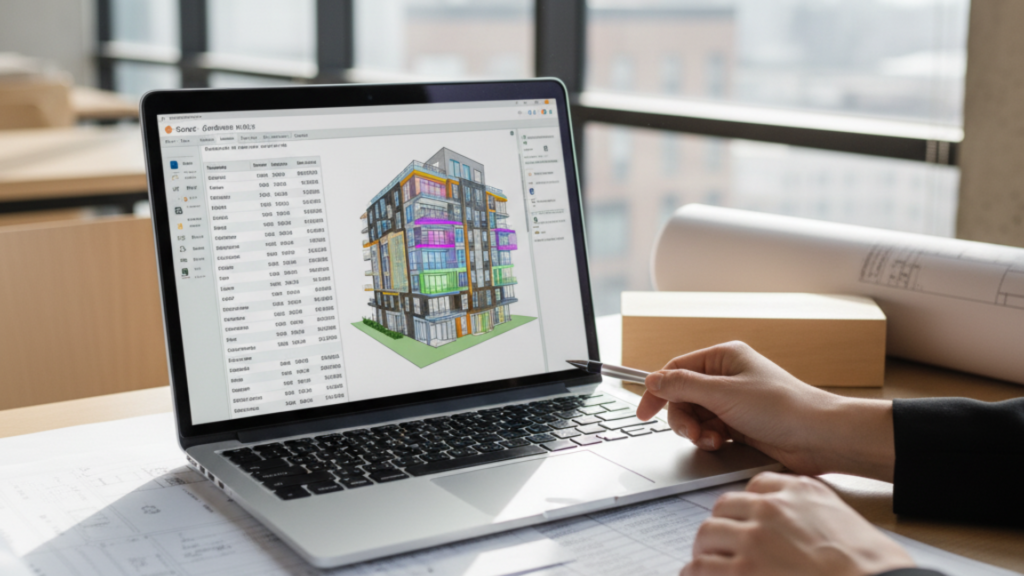
What Are Architectural Estimation Services?
Architectural estimation services provide a comprehensive financial and resource blueprint for a building project before construction begins. Unlike rough budgets calculated on a whim, professional estimation is detailed, data-driven, and based on:
- Architectural drawings and technical specifications
- Quantity takeoffs (QTOs) calculating every material and unit required
- Real-time market research on labor and material costs in the project’s location
- Regulatory costs, including permits, inspections, and code compliance
- Logistics and overhead expenses, such as transportation and equipment rentals
- Contingency allowances to cover unforeseen events
The result is a structured, reliable cost forecast that guides decision-making at every stage, providing stakeholders with the clarity they need to proceed confidently.
Why Estimation Matters in Modern Construction
Rising Material Costs
Material prices in the U.S. construction market have experienced dramatic fluctuations in recent years. Lumber, steel, glass, drywall, and concrete have all seen significant price shifts. Without accurate estimation, these fluctuations can quickly derail a budget mid-project. Professional estimators track live pricing trends, ensuring owners are not caught off guard by market volatility.
Labor Uncertainty
Labor shortages, wage increases, and regional availability challenges have made workforce planning more complex. Estimators incorporate local wage data, productivity rates, and labor availability to ensure that project schedules and costs remain realistic.
Complex Regulatory Frameworks
Construction regulations vary widely across the U.S., making compliance a major cost factor:
- California: Earthquake-resistant structures, fire safety codes, and solar mandates
- Florida: Hurricane-proofing, floodplain compliance, and coastal permitting
- Maryland: County-level permit reviews for structural, energy, and health requirements
- Illinois: Urban zoning and energy efficiency incentives
- Texas: HVAC efficiency standards and drought-resistant landscaping
Estimation accounts for these costs, preventing unforeseen expenses and ensuring timely approvals.
Financing and Investment Confidence
Banks, lenders, and investors prefer projects with detailed, professional estimates. An accurate cost forecast demonstrates feasibility, reduces perceived risk, and accelerates financing or investment approval.
How Estimation Saves Time
Faster Decision-Making
Without clear numbers, decisions stall. Whether choosing custom windows, imported stone flooring, or engineered tile, estimation provides direct cost comparisons, enabling faster, smarter decisions.
Streamlined Scheduling
Estimates outline not only costs but quantities and timelines. Knowing when materials will arrive and how long tasks will take ensures a smooth project schedule and reduces downtime.
Reduced Negotiation Cycles
Contractor bids often vary widely. Benchmark estimates allow owners to quickly assess fairness, reducing lengthy negotiations and potential conflicts.
Preventing Mid-Project Stoppages
One of the most disruptive risks in construction is running out of funds mid-build. Estimation ensures upfront clarity, preventing work stoppages due to budget shortfalls.
How Estimation Saves Money
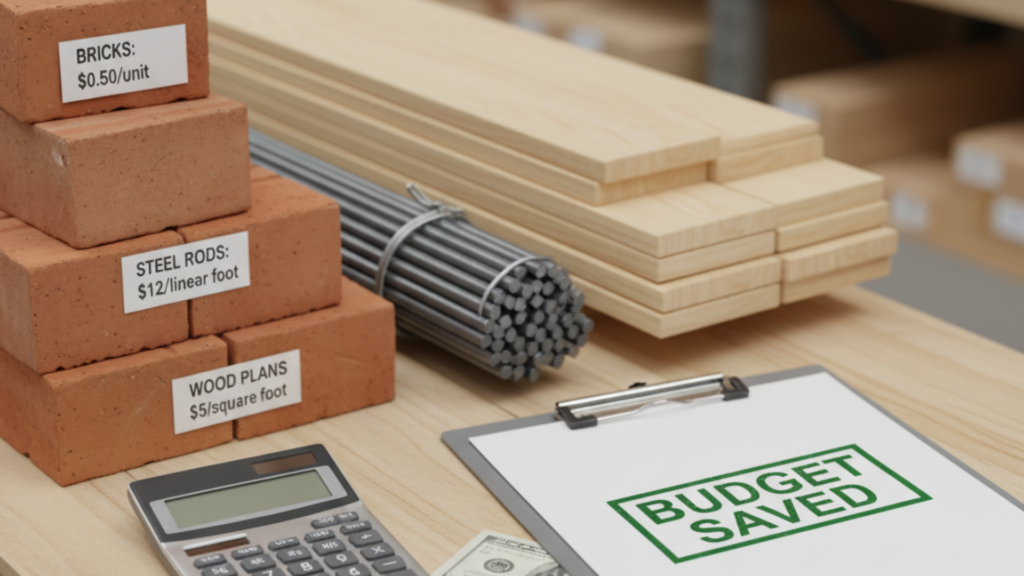
Avoiding Budget Overruns
Comprehensive estimates cover every foreseeable cost, including temporary site utilities, waste management, and inspection fees. This prevents budget creep and unexpected expenses.
Material Optimization
Estimators identify cost-effective alternatives that maintain quality. For example, precast concrete may replace cast-in-place elements, or engineered wood may replace premium timber, saving costs without sacrificing durability.
Waste Reduction
By calculating exact material needs, estimation minimizes over-ordering. This reduces not only purchase costs but also disposal expenses for excess materials.
Smarter Contractor Selection
Independent estimates create transparency, allowing owners to evaluate contractor bids fairly. Inflated or underpriced bids can be quickly identified, reducing hidden costs.
Fewer Costly Change Orders
Design changes mid-project are expensive. Estimation anticipates potential issues early, reducing the frequency and impact of costly change orders.
Step-by-Step: How Estimation Works
- Initial Design Review: Estimators study architectural drawings, structural plans, and specifications.
- Quantity Takeoff (QTO): Detailed measurement of materials required—down to individual screws and bolts.
- Labor Assessment: Evaluates man-hours, skill levels, and wage rates based on project location.
- Material Pricing: Researches real-time supplier costs, factoring in shipping and availability.
- Overhead and Equipment Costs: Includes machinery, site management, utilities, and temporary structures.
- Permit and Compliance Fees: Calculates all required local, county, and state fees.
- Contingency Planning: Adds a 5–15% buffer for unexpected events.
- Final Estimation Report: Combines all components into a structured, actionable document for stakeholders.
Technology Driving Estimation Today
Modern estimation leverages advanced technology:
- Building Information Modeling (BIM): Links 3D models with real-time cost data. Changes in design automatically update costs.
- Artificial Intelligence & Machine Learning: Predicts costs using historical project data and market trends.
- Cloud-Based Collaboration: Enables real-time updates by architects, contractors, and owners simultaneously.
- Mobile Integration: On-site managers can adjust estimates for real-world conditions immediately.
These tools enhance accuracy, reduce errors, and save time for all project stakeholders.
Who Benefits Most from Estimation?
- Homeowners: Gain budget control, avoid surprises, and secure financing confidently.
- Contractors: Reduce disputes, avoid over/under-bidding, and protect profit margins.
- Architects: Align designs with budgets, reducing redesign requests.
- Developers & Investors: Assess feasibility and ROI before committing capital.
Real-Life Case Studies in Savings
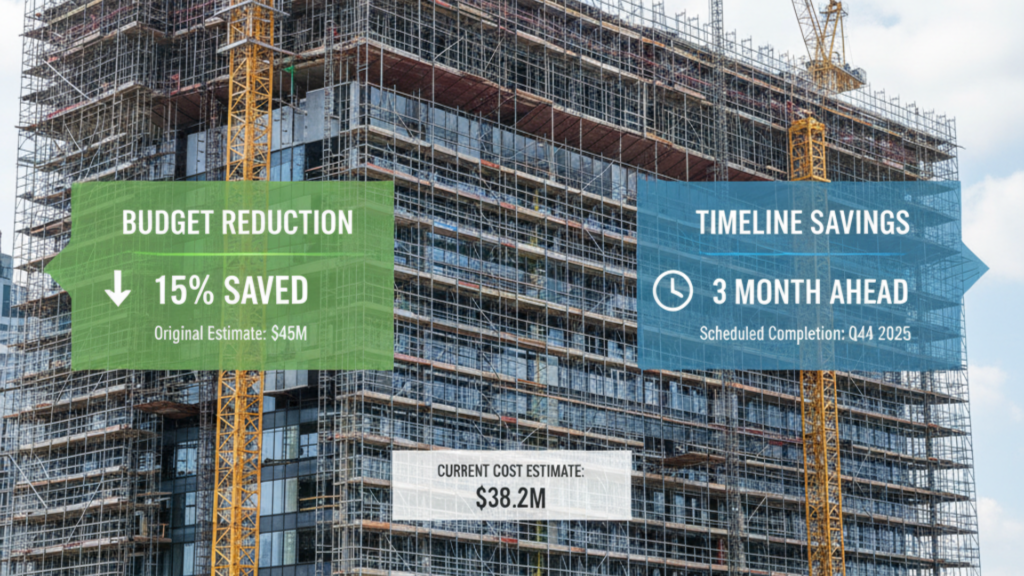
Residential Project in Texas
A $750,000 custom home project avoided a $120,000 overrun by accurately estimating HVAC and insulation costs in accordance with Texas energy codes.
Commercial Project in Maryland
A restaurant tenant fit-out originally estimated at $1.2 million was streamlined to $1.05 million by bulk purchasing kitchen equipment and accounting for health department review costs.
Office Tower in Florida
A $10 million office building integrated hurricane-resistant materials from the start. Early estimation saved $500,000 in retrofitting costs that would have been necessary after inspection.
Institutional Project in Georgia
A school renovation project was estimated for $3 million. Accurate material and labor projections prevented $250,000 in potential overruns and completed construction two weeks ahead of schedule.
Regional Impact Across the United States
Estimation adapts to local challenges:
- California: Earthquake safety, fire-resistant materials, solar compliance
- Florida: Flood zones, wind loads, coastal permitting
- Illinois: Energy-efficient design incentives, urban zoning costs
- Maryland: COMBUILD county review process, health/safety approvals
- Texas: Drought-resistant landscaping, HVAC compliance
- New York: Strict urban zoning, high-rise structural codes
- Arizona: Desert heat load calculations, HVAC, and energy-efficient materials
Accounting for local conditions ensures that projects remain financially sound, legally compliant, and completed on schedule.
Common Mistakes Without Estimation
- Underestimating material quantities
- Ignoring labor cost fluctuations
- Overlooking permit and inspection fees
- Failing to include contingency budgets
- Relying solely on contractor bids without independent validation
These mistakes often lead to delays, cost overruns, and disputes.
The Future of Estimation in Construction
With advances in AI, BIM, and sustainable design integration, estimation is becoming faster, more accurate, and more predictive. Emerging trends include:
- AI-driven predictive cost models
- Integration of environmental sustainability costs
- Real-time material market updates
- Automated compliance checks for permits and energy codes
These innovations promise smarter, more cost-effective construction management.
Frequently Asked Questions
Q1. How accurate are professional estimates?
Typically within 5–10% of actual costs, depending on market conditions.
Q2. Can small residential projects benefit?
Yes. Even kitchen remodels or home additions can avoid thousands in overruns.
Q3. Do estimates include permits and fees?
Yes. Comprehensive estimates always account for local, county, and state requirements.
Q4. How is an estimate different from a contractor bid?
An estimate is an independent roadmap; a bid is a contractor’s proposal. Estimates help evaluate bids fairly.
Q5. When should estimation occur?
Ideally during the design phase, before finalizing drawings or submitting permits.
Conclusion: Building Certainty Into Every Project
Construction without estimation is a gamble. Architectural estimation services bring certainty, clarity, and confidence, reducing waste, preventing overruns, and streamlining timelines.
For homeowners, estimation provides peace of mind. For contractors, it ensures accuracy and profitability. For architects, it aligns design with reality. For developers, it confirms project feasibility.
No matter the project size or type, investing in estimation before construction begins is the smartest financial and operational decision you can make.