
Architecture Services in Maryland — A Comprehensive Guide

By Unified Studio Architect — serving Maryland homeowners, businesses, and developers with thoughtful, code‑compliant, and sustainable design.
Table of contents
- Introduction — why Maryland needs thoughtful architecture
- What an architect does: services you can expect in Maryland
- Maryland licensing, professional standards, and how they affect your project
- Permits, plan review, and inspections — navigating county and city processes in Maryland
- Historic buildings, preservation, and Maryland’s Historic Revitalization Tax Credit
- Energy, resiliency, and state incentives — working with the Maryland Energy Administration and local programs
- Common project types and how architects approach them (residential, commercial, adaptive reuse, additions)
- Typical project workflow and realistic timelines
- Fees, budgets, and value — how architects are paid and how to budget
- Choosing the right architect in Maryland — questions to ask, red flags, and what to expect
- Case study examples (illustrative) and design strategies for Maryland sites
- Top FAQs about architecture services in Maryland
- How Unified Studio Architect helps — services, process, and next steps
- Conclusion and call to action
1. Introduction — why Maryland needs thoughtful architecture
Maryland is a state of rich geographic and cultural contrasts: tidal shorelines and the Chesapeake Bay, dense urban neighborhoods in Baltimore, suburban corridors in Montgomery and Howard counties, and rural towns stretching west toward the Appalachians. Those contrasts make architectural design in Maryland uniquely complex — and uniquely rewarding.
A successful Maryland project balances aesthetics, local codes, environmental constraints (floodplains, steep slopes, stormwater rules), historic preservation, and energy performance. Whether you’re planning a sensitive renovation in a historic district or a modern mixed‑use building near transit, an architect converts aspirations into buildable plans that satisfy regulators, clients, and communities.
This guide explains what architecture services in Maryland involve, how local licensing and permitting work, which incentives you should know about, and practical advice for choosing an architect who can deliver design excellence and regulatory compliance.
2. What an architect does: services you can expect in Maryland
Architects in Maryland provide much more than pretty drawings. A licensed architect brings design skill, technical knowledge, and project leadership across phases that typically include:
- Project Feasibility and Site Analysis: Understanding zoning, setbacks, stormwater constraints, existing utilities, and conservation overlays.
- Concept Design and Schematic Design: Rough floor plans, massing studies, 3D sketches and visualizations to set the project direction.
- Design Development: Refining materials, assemblies, building systems (MEP), and accessibility/egress strategies.
- Permit/Construction Documents: Detailed drawings, code narrative, specifications, and stamp‑ready documents for municipal plan review and contractor bidding.
- Permit Coordination and Plan Review Response: Submitting to local permitting departments, responding to review comments, and revising the documents as needed.
- Bidding and Contractor Selection: Helping you solicit competitive bids, evaluate proposals, and select a contractor.
- Construction Administration: Site visits, submittal review, change order review, and certification that the work conforms to design intent.
- Specialty Services (optional or scoped): Historic preservation consulting, energy modeling, accessibility audits, landscape architecture, or interior design coordination.
Many Maryland jurisdictions now require permit sets that include energy compliance documentation, site grading and stormwater control measures, and clear accessibility details. A full‑service architect prepares and coordinates all these elements so local reviewers and inspectors can sign off efficiently.
3. Maryland licensing, professional standards, and how they affect your project
Architects practicing in Maryland must be licensed by the Maryland Board of Architects, which is part of the Maryland Department of Labor (Licensing and Regulation). Licensing ensures that the individual has completed education and experience requirements (AXP), passed the ARE exams, and adheres to the state’s professional conduct rules.
Hiring a licensed architect protects clients in multiple ways:
- Legal responsibility and accountability: Licensed architects can sign and seal drawings for permit submission. Their stamp signals that the documents meet the standard of care for the profession.
- Ethical standards: Licensed practitioners must follow rules about conflicts of interest, client funds, and professional conduct.
- Continuing competency: Maryland maintains requirements for keeping records and in many cases continuing education resources to ensure current practice.
Before hiring an architect, verify their Maryland licensure and ask for references from recent Maryland projects. A firm that understands Maryland codes, county permit processes, and local historic review boards will save you time and reduce costly revisions.
4. Permits, plan review, and inspections — navigating county and city processes in Maryland
Permitting in Maryland is handled locally by counties and municipal governments. While the technical requirements (e.g., building code based on the International Building Code family) are consistent across many jurisdictions, the submission process, plan review standards, required checklists, and review timelines vary significantly.
Common permitting authorities and portals you will encounter include:
- Montgomery County Department of Permitting Services (DPS) — online dashboards and specific submittal requirements for residential, commercial, solar, and grading permits.
- Baltimore County Permits & Inspections — online applications and clear tutorials for permit creation and inspection scheduling.
- Anne Arundel County Permit Center — in‑person and online services with separate plan review tracks for residential and commercial projects.
- Baltimore City and smaller municipalities — each with their own intake and review workflows.
Key things an architect does during permitting:
- Prepare a permit-ready set: A clear, organized drawing set (site plan, code analysis, floor plans, sections, structural notes, egress, and life safety details) plus supporting documents (roof/attic framing, energy compliance forms, HVAC sizing, etc.).
- Coordinate with specialists: Structural engineers, civil engineers (site grading/drainage), MEP engineers, and, if required, arborists or traffic consultants.
- Track reviewer comments and respond: Municipal reviewers often provide a consolidated set of comments (zoning, structural, electrical, mechanical, energy). Architects coordinate and produce revisions until approvals are issued.
- Arrange inspections: Once the permit is issued, the architect often schedules and attends critical inspections (foundation, framing, final) and helps interpret code inspectors’ comments.
Because process and expectations differ by county, hiring an architect familiar with the specific permitting authority speeds approvals. For example, Montgomery County publishes turnaround‑time dashboards and requires certain digital forms, while smaller jurisdictions may still accept printed sets or require additional historic district approvals.
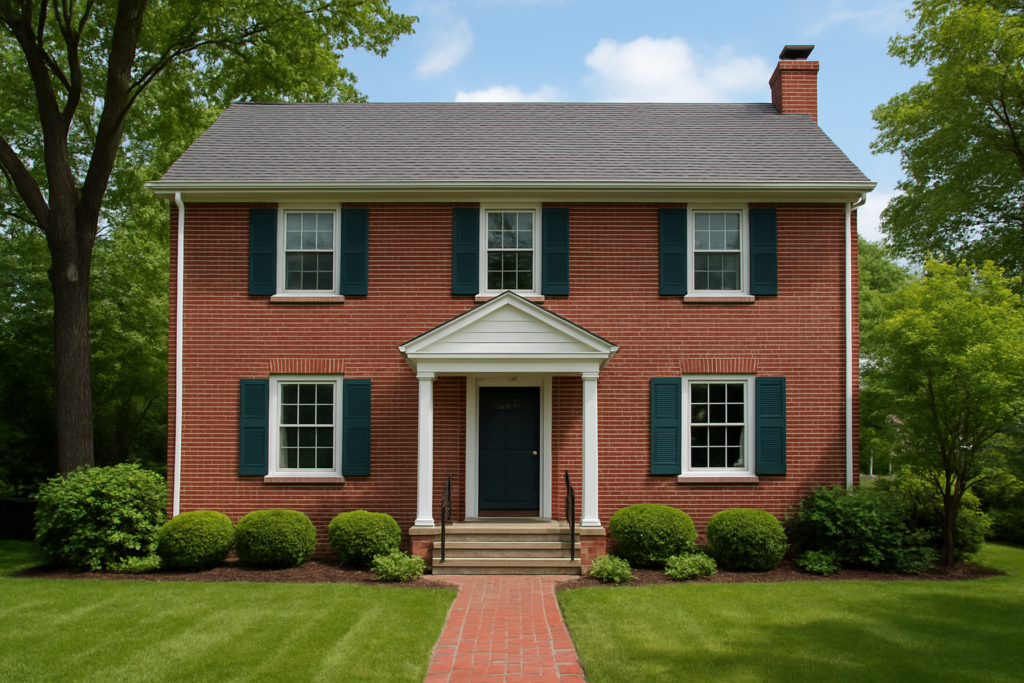
5. Historic buildings, preservation, and Maryland’s Historic Revitalization Tax Credit
Maryland has a deep inventory of historic properties. If your project involves a historic structure or work in a local historic district, there are extra layers of review and potential funding to both protect and incentivize preservation.
Maryland Historic Revitalization Tax Credit (overview)
Maryland offers state tax credit programs that support the rehabilitation of historic properties. For qualifying projects, homeowners and property owners can access tax credits that help offset a portion of the eligible rehabilitation costs. Highlights include:
- Homeowner Tax Credit: Often a state income tax credit equal to 20% of qualified rehabilitation expenditures for owner‑occupied historic single‑family homes (subject to program rules and caps).
- Small Commercial Tax Credit / Main Street Programs: Designed to encourage small commercial rehabilitations in Main Street or designated commercial corridors.
- Competitive Commercial Credits: For larger projects, there are competitive grant/credit processes that require careful documentation, meet the Secretary of the Interior’s Standards for Rehabilitation, and typically include application timelines.
If you plan work on a historic building, involve a preservation‑minded architect early. Early involvement ensures that treatment plans, materials choices, and documentation meet the Maryland Historical Trust (MHT) standards that underpin eligibility for tax credits and grants.
6. Energy, resiliency, and state incentives — working with the Maryland Energy Administration and local programs
Maryland pushes for energy resilience and building performance through programs managed by the Maryland Energy Administration (MEA) and local county incentives. These programs change over time and may include rebates, grants, technical assistance, and funding for solar, efficiency upgrades, and clean energy technologies.
Architects coordinate energy strategies in several ways:
- Early energy modeling and passive design: Siting, orientation, window strategies, thermal envelope, and shading to reduce energy loads.
- Selecting high‑efficiency systems: HVAC sizing, heat pumps, ventilation strategies (ERV/HRV), and controls.
- Renewable integration: Assessing rooftop solar, battery storage, and grid interconnection needs (which also affect permitting and structural design).
- Applying for incentives: Architects can help assemble technical documentation to support MEA grants, county energy incentive applications, and local grant programs (e.g., façade or small business improvement grants).
Because program availability and rules change, your architect should review MEA and county incentive pages during project conception to identify opportunities and avoid assumptions about funding availability.
7. Common project types and how architects approach them
Residential (custom homes, major renovations, additions)
Approach: Start with program and lifestyle priorities, then refine through schematic design and test fits. For renovations, condition assessment, selective demolition, and structural evaluation are early priorities. For additions, coordinate foundations, stormwater, and neighbor sightlines.
Opportunities: Passive solar, daylighting, and modern insulation strategies can reduce lifetime operating costs; historic homes may qualify for tax credits when rehabilitation follows MHT standards.
Commercial (retail, offices, restaurants)
Approach: Understand business operations, code occupancy classifications, egress, ADA access, and mechanical loads. For street‑front retail, façade improvements and signage must meet local design review and sometimes qualify for façade grants.
Opportunities: Main Street and façade programs, energy grants, and tax credits for building improvements.
Adaptive reuse / historic rehabilitation
Approach: Research original construction, document existing conditions, and coordinate with preservation agencies. Treatment plans should be rooted in the Secretary of the Interior’s Standards and tailored for Maryland reviewers.
Opportunities: State tax credits, potentially local preservation grants, and public‑private partnership incentives in redevelopment corridors.
8. Typical project workflow and realistic timelines
Timelines vary by project size and permit jurisdiction. These examples assume a full‑service architect and typical review times:
- Small residential renovation or minor addition: 3–6 months from initial concept to permit issuance (faster if the county has quick residential review tracks).
- Major addition or new custom home (suburban): 6‒12 months for design and plan review, longer if site grading, stormwater control, or well/septic permits are involved.
- Commercial renovation or historic rehabilitation: 9–18 months depending on complexity, historic reviews, and whether environmental remediation, traffic studies, or special inspections are required.
Architects typically divide work into phases (Schematic Design, Design Development, Construction Documents, Bidding, Construction Administration), and each phase has clear deliverables and client approvals. Early coordination with civil, structural, and MEP engineers prevents late surprises and change orders.
9. Fees, budgets, and value — how architects are paid and how to budget
Architectural fees vary depending on scope, complexity, and services included. Typical fee structures include:
- Percentage of construction cost: Common for design‑build or full‑service projects (may range broadly, historically 6%–15% for architectural services depending on scope).
- Fixed fee: For well-defined scopes like permit drawings or schematic packages.
- Hourly or time‑based: For consulting, code reviews, or small tasks.
Budgeting tips:
- Add a contingency (10%–20% for design and construction) for unknown site conditions and scope changes.
- Request a detailed fee proposal that lists included services (e.g., number of revisions, permit coordination, construction administration visits).
- Recognize where an architect adds value: fewer change orders, clearer contractor bids, better long‑term energy performance, higher resale value, and smoother permit processes.
10. Choosing the right architect in Maryland — questions to ask, red flags, and what to expect
Questions to ask potential architects
- Are you licensed in Maryland and familiar with local permitting authorities? (Request license number or verify with the Maryland Board of Architects.)
- Have you worked on projects like mine in this county or city? Can you show examples and references?
- Who will be my point of contact and how often will I get updates?
- What is included in your fee? How do you handle additional services or change orders?
- How do you coordinate with engineers and contractors?
- What is your approach to sustainability and energy performance?
Red flags
- No license or reluctance to provide license details.
- Vague scope or no written proposal.
- Unwillingness to communicate or provide references.
What to expect
- A clear proposal describing phases, deliverables, fees, and estimated timelines.
- A collaborative design process that listens to program needs while translating them into code‑compliant plans.
- Firm support during plan review and construction administration.
11. Case study examples (illustrative)
These examples are illustrative of typical Maryland work and design approaches. For firm‑specific case studies, see our portfolio.
A. Chesapeake Bay Cottage — sensitive shoreline renovation (illustrative)
Challenge: A 1920s cottage near the tidal shoreline required flood‑proofing, updated mechanicals, and energy upgrades while preserving historic character.
Architect’s approach:
- Conducted a flood‑risk analysis and recommended elevating the living floor to meet local floodplain rules while preserving the historic foundation visually.
- Designed a compact heat‑pump system with heat recovery ventilation to improve comfort and reduce reliance on fossil fuels.
- Prepared documentation for the Maryland Historic Revitalization Tax Credit and coordinated with MHT for approval.
Outcome: The project secured the state homeowner tax credit, passed local historic review, and reduced energy use by an estimated 40%.
B. Main Street Retail Facade Upgrade — small commercial grant (illustrative)
Challenge: A row of street‑front retail shops in a designated Sustainable Community needed façade improvements to attract tenants and qualify for a façade grant.
Architect’s approach:
- Prepared façade concept alternatives that respected the historic fabric while improving transparency and signage.
- Produced permit‑ready drawings and coordinated with the local façade improvement grant administrator.
Outcome: The owner received a matching grant, and the updated façade helped lease the space to a local café.
12. Top FAQs about architecture services in Maryland
Q: Do I need an architect for a small remodel?
A: Not always. Simple cosmetic work (paint, flooring) rarely needs an architect. But for structural changes, additions, or projects in historic districts, an architect is highly recommended to manage code compliance and minimize risk.
Q: How long will permitting take in my county?
A: Turnaround time varies. Some counties publish dashboards and target review times; other smaller municipalities may take longer. Your architect should know the typical timelines for the specific permitting office.
Q: Can I use the Maryland Historic Revitalization Tax Credit for my renovation?
A: Possibly, if the building qualifies as historic under Maryland Historical Trust rules and the work follows the Secretary of the Interior’s Standards. Early coordination with a preservation‑focused architect increases the chance of eligibility.
Q: What energy incentives are available now?
A: Program availability changes frequently. The Maryland Energy Administration (MEA) and local counties publish current grant and rebate opportunities; architects should check for current programs during project conception.
Q: How do I check if an architect is licensed in Maryland?
A: Verify with the Maryland Board of Architects (Maryland Department of Labor). A licensed architect can provide their license number and license verification documentation.
13. How Unified Studio Architect helps — services, process, and next steps
At Unified Studio Architect, we offer end‑to‑end architecture services tailored to Maryland’s codes, incentives, and climate realities. Our typical offerings include:
- Initial feasibility assessments and zoning reviews
- Concept, schematic, and design‑development drawings
- Permit‑ready construction documents and coordinated engineering
- Permit coordination and responses to municipal reviewers
- Construction administration and site inspections
- Historic preservation consulting and tax credit documentation assistance
- Energy modeling and MEA incentive coordination
We understand the differences between Montgomery County, Baltimore City, Anne Arundel County, and smaller municipalities. We streamline plan review, coordinate trusted consultants, and help you identify incentive opportunities that reduce net project cost.
Next steps
- Contact us for a complimentary project scoping call.
- We’ll review the site, draft a preliminary scope, and provide a written proposal.
- With your approval, we begin schematic design and take the first step toward permits and construction.
Explore our services: https://www.unifiedstudioarchitect.com/services
View sample projects: https://www.unifiedstudioarchitect.com/portfolio
14. Conclusion and call to action
Architecture in Maryland is about more than buildings: it’s about fitting design into a storied landscape of bays, neighborhoods, and historic places while meeting modern standards for performance and safety. A knowledgeable, licensed architect is your best partner in navigating permitting, capturing value through incentives, and delivering a building that serves you for decades.
If you’re starting a project in Maryland — a renovation, new home, or commercial retrofit — reach out to Unified Studio Architect. We combine technical expertise, local knowledge, and practical project management to turn projects into lasting places.
Contact us: https://www.unifiedstudioarchitect.com/contact
Notes & Resources: For more information on licensure, permitting, historic tax credits, and energy programs, see the Maryland Board of Architects, Maryland Energy Administration, and Maryland Historical Trust websites.