
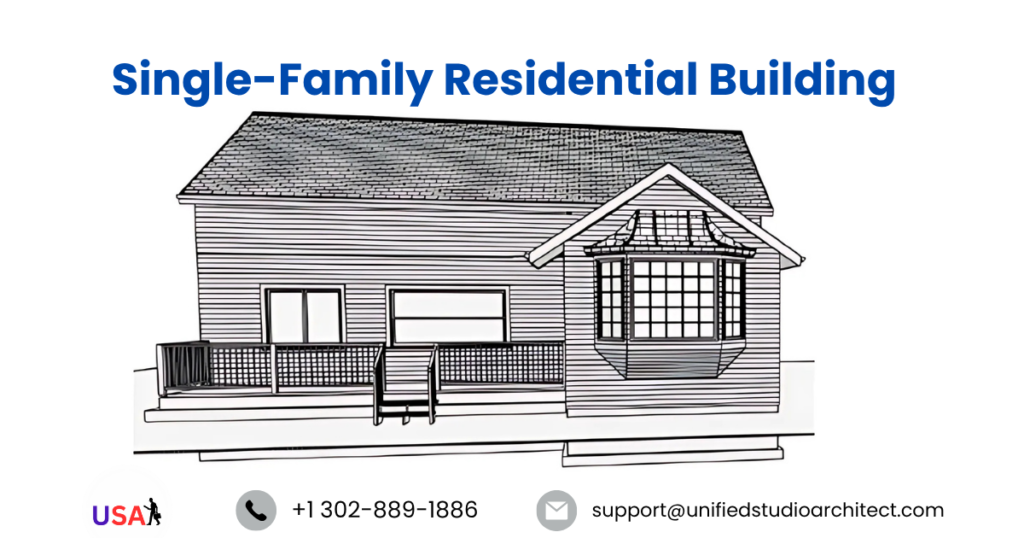
Residential Home Expansion in New York: Project Overview
This case study outlines the detailed architectural planning, code coordination, and successful execution of a single-family residential expansion located in a suburban neighborhood of Suffolk County, New York. The homeowner, referred to as XXX, aimed to modernize their home to better serve a growing family’s needs while improving the structure’s efficiency and usability. The project scope included expanding the main living area, enhancing circulation and layout, and constructing a new two-level garage, all while preserving neighborhood character and ensuring full code compliance. The residence lies in a moderate-density residential zone (R-2), requiring strict adherence to zoning ordinances, construction type regulations, and energy performance standards. Unified Studio Architect played a critical role in converting the homeowner’s vision into a cohesive architectural solution that met functional, aesthetic, and regulatory goals.Project Vision and Design Intent
The homeowner’s core requirements centered around expanding the livable area, introducing flexible-use spaces, and integrating a new garage with both vehicle and auxiliary functionality. Equally important were compliance with local building codes, timely permit acquisition, and the long-term sustainability of the upgrades. Primary design objectives included:-
- Designing an open-plan living space with enhanced light and circulation
-
- Accommodating a guest bedroom and full bathroom within the expansion footprint
-
- Constructing a structurally independent two-level garage suitable for future adaptive reuse
-
- Using durable, energy-efficient building materials throughout
-
- Ensuring that all work would meet or exceed requirements established by the 2020 New York State Residential Building Code and related construction codes
Site and Contextual Analysis
Located on a 15,500 square-foot parcel, the original residence occupied roughly 1,008 square feet. With ample yard space, setbacks, and site topography conducive to construction, the lot supported expansion without zoning variances. The site is connected to a public water supply and utilizes a cesspool-based waste management system.Site Zoning Summary
-
- Zoning Code: R-2 (Moderate Density Residential)
-
- Use Classification: Single-Family Dwelling
-
- Maximum Permissible Height: 60 feet
-
- Actual Height After Expansion: 17′-6″
-
- Maximum Stories Permitted: 2
-
- Actual Stories Built: 1
-
- Risk Category: II
-
- Wind Exposure Category: B
Applicable Code Requirements
This residential expansion adhered to the following codes:-
- 2020 Residential Code of New York State (RCNYS)
-
- 2020 Energy Conservation Construction Code
-
- 2020 NYS Fire Code, Fuel Gas Code, and Plumbing Code
Code-Based Design Standards
-
- Climate Zone: 4A (Mixed-Humid)
-
- Wind Design Speed (Ultimate): 115 mph
-
- Wall Insulation: R13
-
- Floor Insulation: R19
-
- Ceiling Insulation: R49
-
- Slab Insulation: R10
-
- Window U-Factor: 0.35
-
- Solar Heat Gain Coefficient (SHGC): 0.4
For up-to-date New York building codes, see the official New York State Uniform Fire Prevention and Building Code.
Architectural Layout and Functional Space Planning
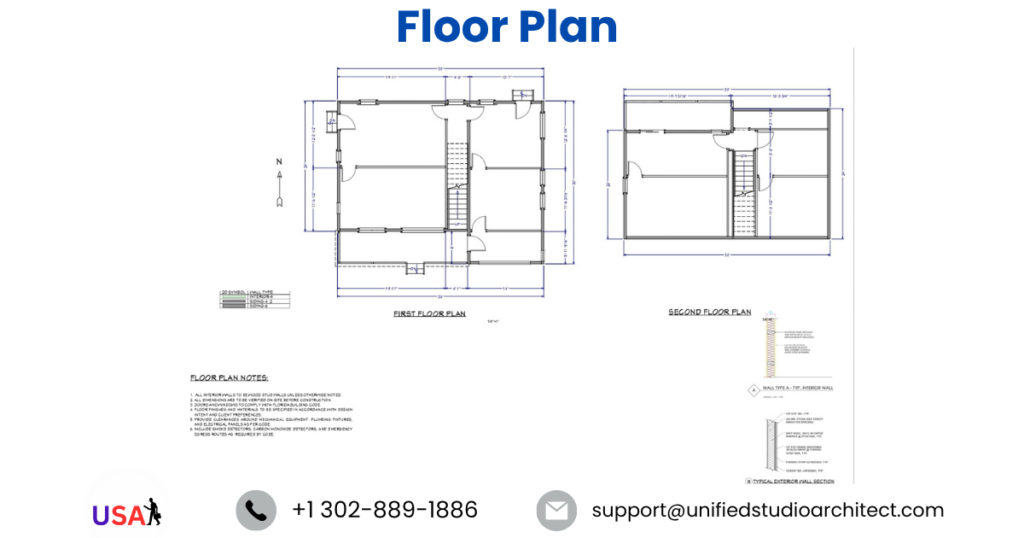
First Floor Expansion Strategy
The new floor plan introduced nearly 616 square feet of conditioned space, designed to blend naturally with the original footprint. Modifications included:-
- A fully integrated dining and kitchen area with open visual connectivity to the living room
-
- New rear-facing guest suite with built-in closet and nearby bath
-
- Enlarged mudroom with rear yard and garage access
-
- Improved circulation paths, wider doorways, and better spatial transitions
Second Floor Improvements
While the expansion was single-story, the second floor of the existing home received upgrades to improve usability:-
- Master bedroom received additional storage through a walk-in closet
-
- Shared bath reconfigured with dual sinks and updated plumbing
-
- Hallways improved for better lighting and flow
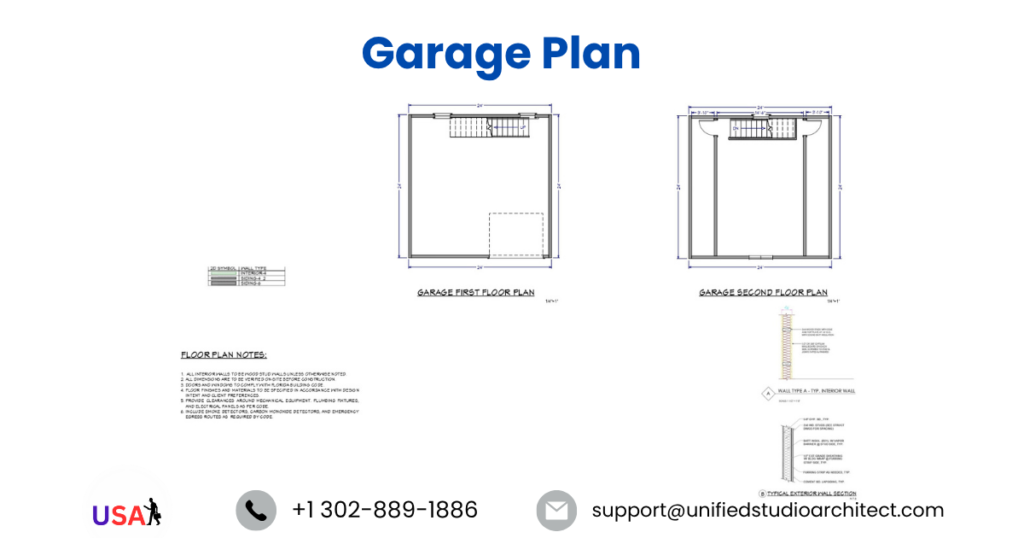
Garage Design and Integration
The newly added garage covered 576 square feet on the first floor, with a second floor for potential future workspace, fitness area, or guest studio.-
- First Floor: Two-car capacity, mechanical room, and dedicated tool storage
-
- Second Floor: Designed as an open, flexible space for non-habitable use
-
- Exterior finishes matched to the home’s elevation design for cohesion
Structural Design and Building Envelope
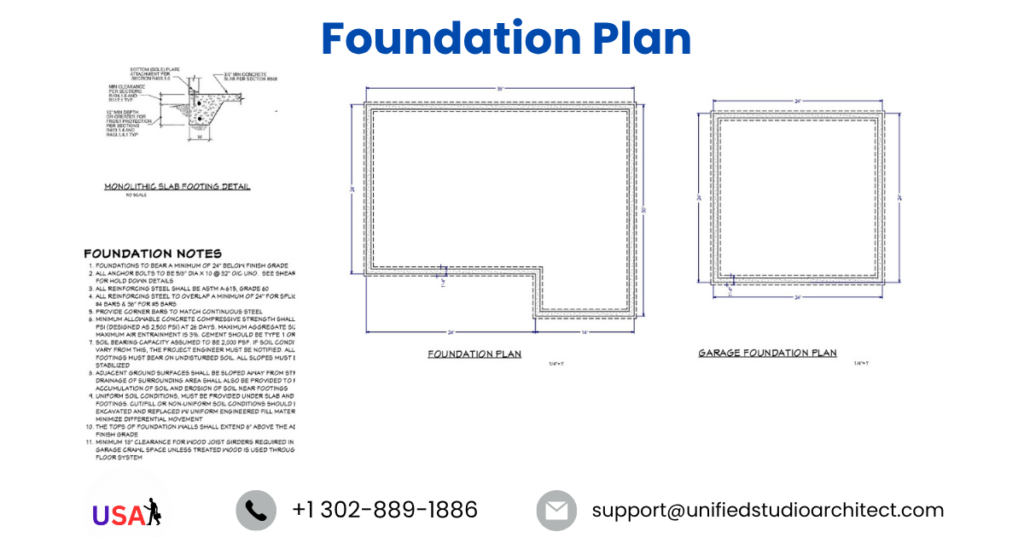
Foundation and Substructure
The foundation design consisted of:-
- Monolithic slab-on-grade with perimeter footings
-
- Reinforcement per structural load requirements
-
- Rigid insulation beneath slab edges to meet energy code
-
- Anchor bolts installed to secure sill plates
Framing and Roofing Systems
The main building and garage were framed using conventional 2×6 and 2×8 lumber. Roofs were framed with prefabricated trusses and reinforced ridge beams.-
- Roof Pitch: 6:12 gable
-
- Attic Ventilation: Continuous soffit and ridge vents
-
- Ceiling Height: 9.1′ (First Floor); 10.1′ (Garage Second Floor)
-
- Highest Ridge Height: 21.1′
Exterior Envelope
Unified Studio Architect designed an exterior shell that reduced energy loss and required minimal maintenance:-
- Fiber-cement siding for longevity and weather resistance
-
- Vinyl-framed low-e windows strategically placed for solar gain
-
- Thermally broken entry doors with high insulation values
-
- Roof underlayments and drip edges to protect against ice dams
Fenestration and Hardware Specification
Windows
The window schedule included over a dozen window types. Prioritized goals included:-
- Compliant bedroom egress dimensions
-
- Light-maximizing locations in kitchen and living areas
-
- Double-hung windows throughout for airflow control
Doors
Nine door types were specified:-
- Main Entry: 36-inch wide insulated steel door
-
- Patio Access: 54-inch slider
-
- Garage: 9-foot-wide overhead door with side-mounted opener
-
- Interior: Solid-core 2-panel doors for privacy and durability
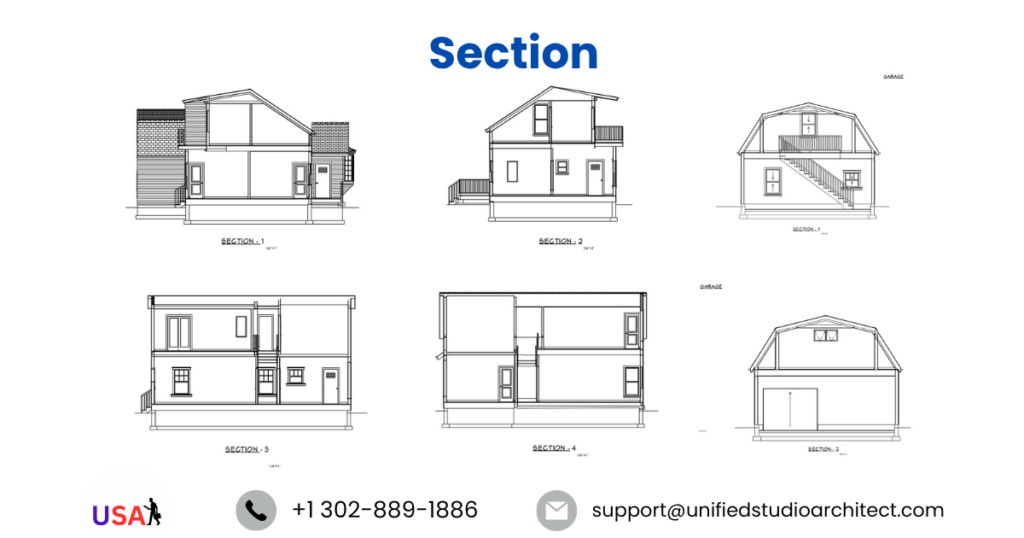
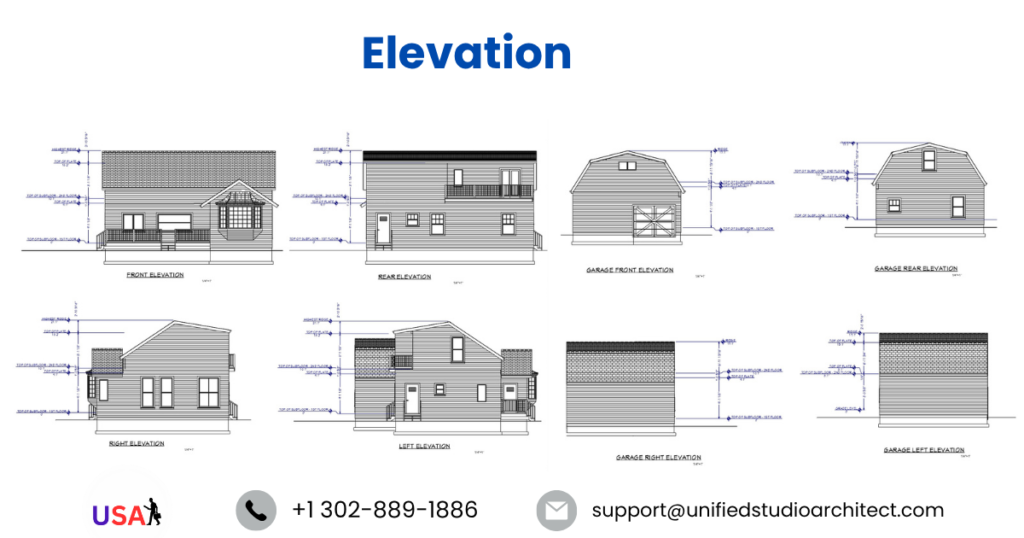
Elevations and Sections
-
- Front Elevation: Maintained symmetry and porch line
-
- Rear Elevation: New bedroom and kitchen bump-outs with full glazing
-
- Left and Right Elevations: Matching gables and continuous wall lines
-
- Clarify structural relationships between floors and ceiling planes
-
- Show transitions between new and existing walls
-
- Illustrate full wall assemblies including sheathing, insulation, and finish layers
Construction Administration and Site Coordination
Permit Submittals
Unified Studio Architect prepared a full permit package including:-
- Architectural plan sets (24×36 formatted)
-
- Site plan with zoning overlays and north arrow
-
- Energy compliance sheets (ResCheck documentation)
-
- Structural notes and material callouts
Construction Sequencing
The project was built over approximately 26 weeks, segmented into the following major phases:-
- Site preparation and foundation pouring (3 weeks)
-
- Framing and rough carpentry (4 weeks)
-
- Roofing, window, and door installation (3 weeks)
-
- Rough-ins for mechanical, electrical, and plumbing (3 weeks)
-
- Insulation and drywall (2 weeks)
-
- Interior finish carpentry, cabinets, and fixtures (4 weeks)
-
- Final inspection and punch list (1-2 weeks)
Challenges and Strategic Solutions
Integration of Old and New Structures
To prevent inconsistencies at structural joints, framing at the transition zones was pre-planned using as-built surveys and tie-in details.Winter Construction Considerations
Foundations were poured using heated enclosures and chemical admixtures to maintain strength during cold weather.Utility Routing and Panel Access
Garage walls and ceilings were designed to accommodate mechanical duct runs and allow for easy future panel access.Product Availability
Where window or door lead times were too long, equivalent products with matching performance specs were substituted without affecting the project timeline or permitting.Client Results and Project Outcome
The completed residential extension provided the client with substantially improved living conditions, upgraded aesthetics, and increased property value. The garage has already proven useful as a workshop and could be converted into a studio or guest suite in the future. Notable improvements include:-
- Comfortable and larger living spaces with natural light
-
- Greater indoor-outdoor connectivity through new entrances
-
- A structurally independent garage for diverse uses
-
- Higher energy performance and lower utility bills
-
- Smooth permitting experience and code inspection approvals