
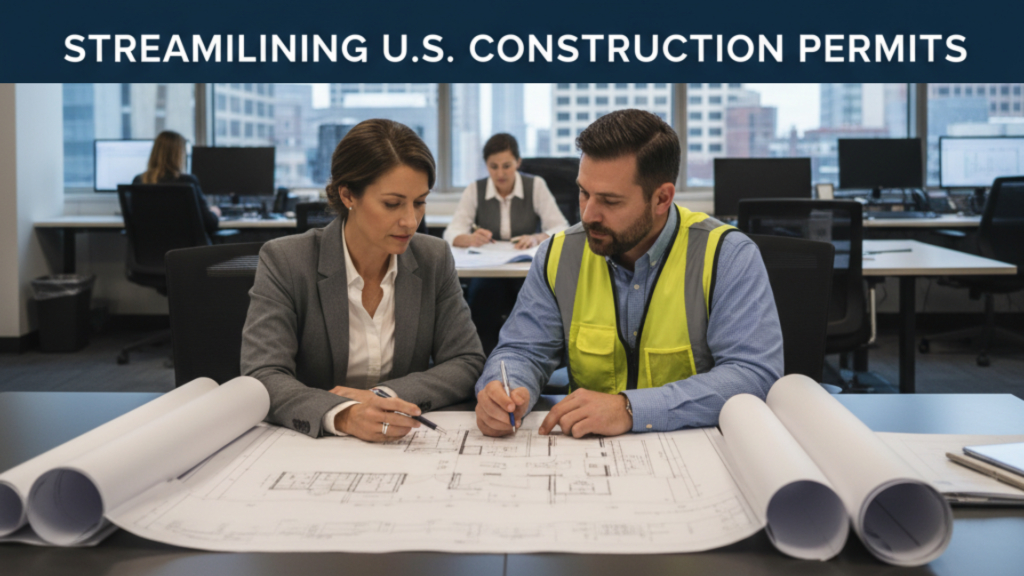
How Architects and Contractors Can Collaborate for Faster Permits and Approvals in the U.S.
Introduction
In the United States, architects and contractors often face one of the most frustrating bottlenecks in the construction process: permits and approvals. Whether it’s a residential home renovation in California, a commercial build-out in Texas, or an institutional facility in New York, the path to approval is rarely straightforward. Municipalities enforce different zoning laws, building codes, fire safety standards, and environmental regulations, making it essential for both professionals to work hand in hand.
Collaboration between architects and contractors is no longer optional—it’s a necessity for meeting deadlines, managing budgets, and ensuring code compliance. The faster a project moves through approvals, the quicker it can break ground, saving clients money and giving firms a competitive edge.
In this blog, we’ll break down:
- Why collaboration matters for permit approvals.
- The role of architects in the permit process.
- The role of contractors in navigating approvals.
- Strategies architects and contractors can use together for smoother submissions.
- The importance of local knowledge and working with authorities.
- How technology and AI are revolutionizing permit processes.
- Case studies and real-world best practices.
- How this approach impacts residential, commercial, and institutional projects across the U.S.
By the end, you’ll see why successful projects depend not only on design and construction but also on the synergy between architects and contractors when dealing with permits.
Why Permits and Approvals Are a Challenge in the U.S.
Before diving into collaboration strategies, it’s crucial to understand why permits take so long in the U.S. construction industry:
- Complex Building Codes: Each state, city, and county may have its own building codes. For example, Chicago follows its own Chicago Building Code, while California enforces Title 24 energy compliance.
- Multiple Review Agencies: Projects must pass reviews from zoning, building, fire, environmental, health, and public works departments.
- Long Review Timelines: In some jurisdictions, reviews can take 3–6 months, especially for large commercial projects.
- Revisions and Resubmissions: Many permits are rejected on the first submission due to missing documentation or unclear drawings.
- Local Politics and Community Input: Projects may require public hearings or community feedback before approval.
This complexity highlights the importance of team alignment between architects and contractors from day one.
The Architect’s Role in Permitting
Architects are primarily responsible for design, compliance, and documentation. Their expertise ensures that drawings meet local building codes, zoning ordinances, and accessibility requirements.
Key responsibilities include:
- Code Research and Application: Architects must research local zoning, setbacks, FAR (Floor Area Ratio), occupancy types, and egress requirements.
- Permit Drawings: Providing clear, accurate, and code-compliant construction drawings for submittals.
- Coordination with Engineers: Ensuring structural, mechanical, electrical, and plumbing plans align with the design.
- Responding to Review Comments: Addressing corrections from the permit office promptly.
- Advocacy with Authorities: Acting as a liaison with plan reviewers and inspectors.
Without a detail-oriented architect, projects risk repeated rejection, which leads to costly delays.
The Contractor’s Role in Approvals
Contractors, on the other hand, bring practical construction expertise and deep knowledge of local building departments. Their role complements architects by ensuring the design is buildable, cost-effective, and approvable.
Contractor contributions include:
- Pre-Construction Input: Identifying constructability issues that could trigger review comments.
- Local Authority Relationships: Many contractors have established relationships with local inspectors and permit techs, which can expedite communication.
- Cost Estimation for Code Requirements: Contractors assess the financial impact of code-driven design changes.
- Permit Expediter Role: Some contractors or subcontractors specialize in tracking permits through different departments.
- On-Site Compliance: Ensuring field construction matches the approved permit drawings.
When contractors are involved early, they prevent designs from being sent back due to practical execution concerns.
Why Collaboration Is Essential

In isolation, architects might create code-compliant designs that are not constructible within budget, while contractors may focus on efficiency without fully grasping zoning or accessibility nuances.
Together, they achieve:
- First-time approval success.
- Shorter review cycles.
- Clearer communication with permit officials.
- Reduced change orders and resubmissions.
- Satisfied clients due to faster timelines.
Collaboration is not just about efficiency—it’s about reducing risk.
Strategies for Faster Permits and Approvals
1. Start with Early Collaboration
- Schedule design–build meetings before schematic designs are finalized.
- Discuss zoning, egress, fire code, and ADA requirements early.
2. Conduct Pre-Submission Reviews
- Review drawings jointly for compliance, clarity, and buildability.
- Contractors can flag missing details (e.g., firestopping, accessibility slopes).
3. Use Permit Expediters
- Many U.S. cities allow licensed permit expediters who navigate the bureaucracy.
- Having both architect and contractor coordinate with expediters reduces back-and-forth delays.
4. Build Strong Local Authority Relationships
- Contractors often know inspectors personally—this can speed up approvals.
- Architects should engage in code seminars and community planning meetings.
5. Digital Collaboration Platforms
- Use BIM (Building Information Modeling) to ensure plans are coordinated across trades.
- Submit digitally when available (e.g., NYC DOB NOW, Montgomery County COMBUILD).
6. Assign a Dedicated Permit Manager
- Designate one person from the architect or contractor side to track submittals.
7. Respond Quickly to Review Comments
- Set internal deadlines for resubmissions.
- Use a shared database for review comments and resolutions.
Local and Regional Considerations
Permit processes vary widely across the United States. Let’s look at some state-specific differences:
- California: Strict seismic and energy efficiency codes (Title 24).
- Texas: City-by-city permitting; Houston has one of the fastest approval systems, while Austin is notoriously slow.
- Florida: Wind load and hurricane codes are critical.
- New York: Multi-agency reviews (DOB, FDNY, Landmarks).
- Illinois: Chicago requires special site plan approvals for certain zones.
- Maryland & Virginia: Online submission systems like ePlans and ProjectDox.
By knowing these differences, architects and contractors can anticipate what local reviewers prioritize, reducing revisions.
Residential Projects: Speeding Up Permits

For homeowners and residential architects, delays in permits can make families anxious and increase carrying costs. Collaboration helps by:
- Preparing clear site plans with setbacks and lot coverage calculations.
- Coordinating with contractors to verify foundation and framing details.
- Addressing neighborhood covenants (common in HOA communities).
- Ensuring compliance with state-specific energy codes.
Commercial Projects: Navigating Complex Reviews
Commercial projects often face more scrutiny because they involve public safety and occupancy. Collaboration ensures:
- Fire code compliance for exits and sprinklers.
- ADA-compliant restrooms and entrances.
- HVAC and mechanical systems coordinated with electrical drawings.
- Cost-effective material choices that meet code.
Institutional Projects: Schools, Hospitals, and Government Buildings
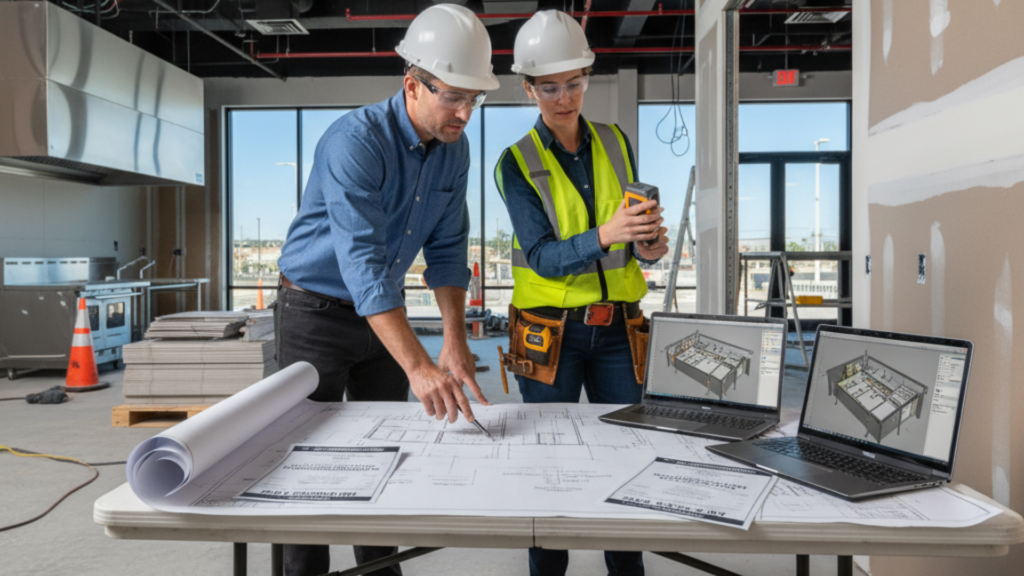
Institutional projects undergo the strictest review, sometimes at state or federal levels. Architects and contractors must:
- Follow specialized healthcare or educational codes.
- Allow for phased approvals (shell permits, interior permits).
- Provide full documentation of life-safety systems.
- Engage early with community boards or state education departments.
Technology and AI in Permitting
The future of permitting is digital and AI-driven.
- AI-Powered Plan Review: Some U.S. cities are testing AI tools to check code compliance automatically.
- BIM Integration: Authorities may soon accept BIM models directly.
- Online Portals: Systems like ePermitHub and Accela are gaining adoption nationwide.
- Predictive Timelines: AI can estimate permit approval times based on project type and location.
Architects and contractors who embrace technology will be ahead of the curve.
Case Study: A Commercial Restaurant Project
In a recent U.S. restaurant project, the initial submission faced fire lane access issues. Instead of working separately, the architect and contractor:
- Revised the site plan together.
- Verified turning radii for emergency vehicles.
- Submitted clarifications proactively.
The permit was approved on the second review—saving 2 months compared to the average restaurant project in the city.
Best Practices Checklist for Collaboration
- Involve contractors during schematic design.
- Review code and zoning before final drawings.
- Use BIM for coordinated submissions.
- Leverage local relationships with inspectors.
- Assign one point of contact for permit tracking.
- Respond to review comments within 3–5 business days.
Conclusion
Permits and approvals remain one of the biggest roadblocks in U.S. construction. But with strategic collaboration between architects and contractors, projects can move faster through the system, saving clients money and improving overall efficiency.
The recipe for success? Early involvement, strong communication, use of technology, and local expertise.
As the industry evolves, firms that master this partnership will consistently deliver projects on time, on budget, and ahead of the competition.
- architects and contractors collaboration
- faster building permits USA
- construction permit approvals
- building permits process U.S.
- architect near me for permits
- contractor for faster permits
- how to get building permits approved quickly
- U.S. construction approvals
- residential building permits USA
- commercial building permit process
Throughout the blog, references were made to California, Texas, Florida, New York, Illinois, Maryland, and Virginia—ensuring visibility for localized searches. Phrases like “architect near me” and “contractor for permits” help with AEO and voice search optimization.